What Is an SEO Audit?
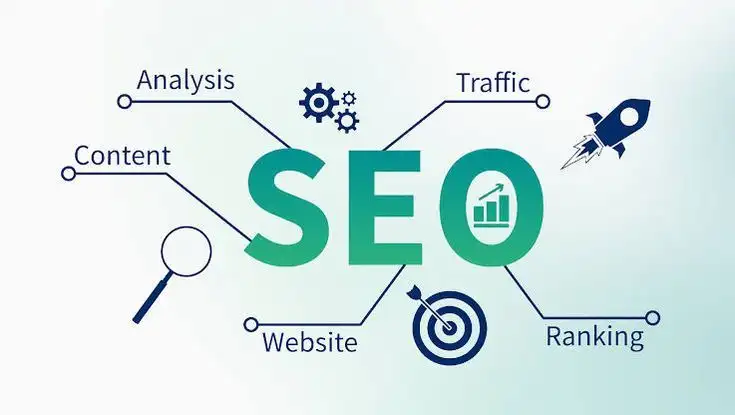
An SEO audit is a detailed review of your website's current search performance. It examines everything that affects how Google finds, reads, and ranks your pages — from technical infrastructure and content quality to backlinks and competitor comparison.
Think of it as a full health checkup for your website. Just like a doctor's checkup finds problems before they get worse, an SEO audit finds the issues quietly suppressing your rankings — many of which you'd never spot by looking at the website normally.
The result is a prioritized action plan: what's broken, why it matters, and what to fix first for the fastest improvement.
Why Most Lucknow Businesses Need an Audit Before Anything Else
Many businesses in Lucknow jump straight into publishing content or building backlinks without understanding why their existing pages aren't working. That's like painting a house with a cracked foundation — the effort is wasted until the underlying problems are fixed.
An SEO audit stops that cycle. It tells you exactly what's wrong before you invest more time or money into strategies built on a broken base. It's the most efficient first step any website can take — whether you're brand new to SEO or have been trying for months with little to show for it.
I've audited websites across health, real estate, travel, and hospitality niches and consistently found that even well-maintained websites have 10–20 fixable issues suppressing their rankings. Finding and fixing those issues is what unlocks real growth.
What My SEO Audit in Lucknow Covers
This is not a tool-generated report with a score out of 100. Every audit I deliver is manually reviewed, clearly explained, and built around your specific website and goals.
1. Technical Health Review
I check all the behind-the-scenes factors that affect whether Google can properly
access and index your website. This includes page speed, mobile usability, crawl
errors, broken links, redirect issues, HTTPS status, and XML sitemap accuracy.
Technical problems are often invisible to website owners but have a major impact on
rankings. This section of the audit surfaces every one of them with clear context on
how serious each issue is.
2. Index Coverage Analysis
Having pages on your website doesn't mean Google has indexed all of them. Index
coverage gaps — caused by incorrect settings, duplicate content, or structural
issues — mean some of your pages may simply not exist in Google's eyes.
I use Google Search Console data to identify every page with indexation problems,
explain why it's happening, and outline the exact fix needed to get those pages
properly into Google's index.
3. On-Page Content Quality Review
I review your most important pages for content depth, keyword relevance, heading
structure, title tags, meta descriptions, and search intent alignment. This
identifies pages that are targeting the wrong keywords, missing key content
elements, or simply not good enough to compete for Page 1.
This section often reveals quick wins — pages that are close to ranking but being
held back by one or two fixable content issues.
4. Keyword Gap Analysis
A keyword gap analysis compares the search terms your website currently ranks for
against the terms your competitors are winning. This reveals valuable keyword
opportunities you're completely missing — searches your target customers are making
that your website isn't capturing at all.
These gaps become the foundation of your content and optimization strategy going
forward.
5. Backlink Profile Review
Your backlink profile — the collection of websites linking to you — is one of
Google's strongest trust signals. I review your existing backlinks for quality,
relevance, and any toxic or spammy links that could be hurting rather than helping
your rankings.
This section also shows how your link authority compares to your top competitors,
and identifies the types of links you need to build to close that gap.
6. Competitor Benchmark Analysis
Understanding why your competitors rank above you is just as important as fixing
your own website. I analyze your top 3–5 competitors in Google — their content
strategy, backlink strength, site structure, and keyword targeting — to identify
exactly where the gap is and what it will take to overtake them.
This gives your SEO strategy a clear competitive direction, not just a list of
internal fixes.
7. Core Web Vitals & Page Experience Assessment
Google uses real-world user experience data — how fast your pages load, how stable
they are, and how quickly they respond to clicks — as a direct ranking factor. I
assess your Core Web Vitals performance against Google's recommended thresholds and
identify the specific elements causing failures.
Poor page experience scores are one of the most common and fixable ranking
suppressors I find in audits.
8. Local SEO Audit (For Lucknow Businesses)
For businesses serving local customers, I also review your Google Business Profile
completeness, local citation consistency, review profile health, and local keyword
visibility. Many Lucknow businesses are missing basic local signals that directly
affect their Google Maps rankings.
This section gives you a clear picture of your local search presence and what's
needed to dominate nearby searches in your area.
9. Search Console & Analytics Data Review
Raw traffic numbers tell only part of the story. I analyze your Google Search
Console and Analytics data to identify traffic patterns, ranking fluctuations,
high-impression/low-click keywords, and pages that are losing ground over time.
This data-driven layer of the audit connects technical and content findings to real
performance trends — giving context to every recommendation in the report.
What You Receive After the Audit
Every audit I deliver includes:
You don't receive a confusing spreadsheet and get left to figure it out. Every finding is explained clearly, and every recommendation tells you not just what to fix but why it matters and how to do it.
Who Should Get an SEO Audit?
| Situation | Why an Audit Helps |
|---|---|
| Website not ranking despite good content | Uncovers the technical or structural barriers blocking Google |
| Sudden traffic drop with no clear reason | Identifies the cause — algorithm update, penalty, or technical issue |
| About to invest in SEO | Ensures budget goes toward fixing real problems, not random activities |
| Website recently redesigned or migrated | Confirms no rankings were accidentally damaged during the process |
| Running SEO but unsure if it's working | Benchmarks current performance and validates or redirects the strategy |
| Starting a new website | Sets the right foundation before content and link building begin |
One-Time Audit vs Ongoing SEO — What's Right for You?
A one-time website diagnostic is perfect if you want to understand your current situation before committing to a full ongoing strategy. You receive the complete findings and can implement the fixes yourself, with your developer, or with my help.
Ongoing SEO engagement includes a full audit as the starting point — followed by continuous implementation, content creation, link building, and monthly performance tracking. This is the right path if you want to not just diagnose the problem but fix it and keep growing.
Both options start with the same thorough, honest analysis. The difference is what happens after the report.
My Audit Process — Step by Step
Discovery Call (Free)
We talk about your website, your goals, and any issues you've already noticed. This helps me understand what to prioritize in the audit.
Full Website Crawl & Data Collection
I crawl your entire website, pull your Search Console and Analytics data, analyze your backlink profile, and benchmark against your top competitors.
Manual Review & Analysis
Every finding is manually reviewed and cross-referenced. I assess severity, root cause, and fix priority for every issue found.
Report Writing
I compile all findings into a clear, structured report — written in plain language with no confusing terminology. Every issue includes its impact, priority level, and recommended fix.
Walkthrough & Q&A Call
We go through the report together. I explain every finding, answer your questions, and give you a clear sense of where to start.
People Also Ask — SEO Audit Questions
Clear answers about timelines, processes, and how we drive real growth for your business.
Not Sure Where to Start?
Let's talk about your business goals and I'll recommend the right service for you — no pressure, no jargon.