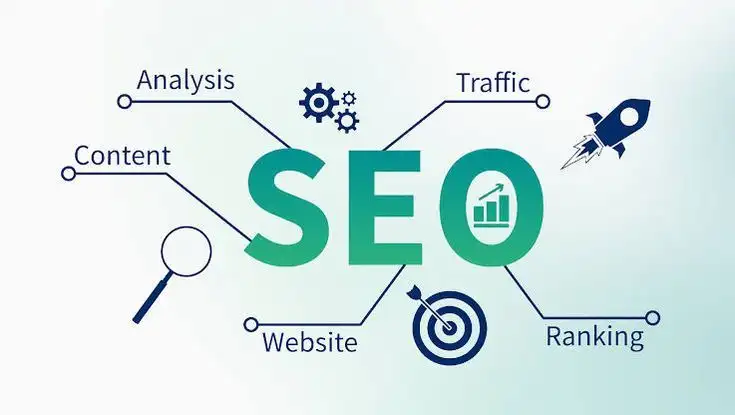
If you run a website and you're not showing up when people search for what you offer, SEO is the reason — and it's also the fix. Search Engine Optimization is the practice of shaping a website so that search engines like Google can find it, understand it, and confidently show it to the right people at the right moment.
Most business owners hear "SEO" and think of keywords. That's a small part of it. Real SEO sits at the intersection of technical accessibility, content that actually answers a query, and the trust signals that tell Google a site is worth ranking. Organic search still drives a large share of website traffic for most industries, and unlike paid ads, that visibility doesn't disappear the moment you stop spending.
This guide is built as a hub. Every major SEO concept — from crawling and indexing to search intent, technical SEO, and local SEO — gets a clear, practical introduction here, with links to dedicated articles where I go much deeper into each one. Bookmark this page; I'll keep linking new deep-dive guides back into it as I publish them.
What Is SEO?
SEO Meaning and Definition
SEO stands for Search Engine Optimization — the process of improving a website so search engines can crawl it, understand what it's about, and rank it for relevant searches. It covers everything from the words on a page to the code behind it and the reputation a site has built across the web.
SEO isn't "getting traffic" in a generic sense. It's specifically about earning organic visibility — the unpaid listings in Google's search results — by making a site genuinely deserving of that placement for a given query.
Why Is SEO Important for a Website?
A website that's invisible in search doesn't get discovered by people actively looking for what it offers. SEO matters because it directly affects:
- Visibility — whether your business shows up when someone searches for your service
- Organic traffic — visitors who arrive without you paying per click
- Leads and sales — search is often the highest-intent channel, since people are actively looking
- Brand discovery — ranking consistently builds recognition over time
- Long-term acquisition cost — unlike ads, organic rankings keep working after the initial investment
How SEO Is Different From Paid Search
Organic results are earned through relevance and quality; Google Ads results are paid placements. The cost models are fundamentally different — SEO takes upfront time and effort with no per-click cost, while Google Ads charges for every click, indefinitely.
Ads can bring traffic within hours. SEO usually takes weeks to months to show meaningful movement, but the results compound and don't stop the moment you pause spending. Many businesses eventually run both — ads for immediate demand, SEO for sustainable, long-term acquisition.
How Does SEO Work?
How Search Engines Discover Websites
Before a page can rank, Google has to find it. This happens through crawling — Googlebot follows links from page to page, discovering new and updated URLs. Websites also submit an XML sitemap to help Google find pages faster, especially on larger or newer sites.
Pages with no internal or external links pointing to them — often called orphan pages — can be very hard for Google to discover at all, no matter how good the content is.
How Search Engines Understand Web Pages
Once a page is crawled, Google tries to understand what it's actually about. This involves analyzing the content itself, the keywords and phrasing used, the entities (people, places, brands, concepts) mentioned, the surrounding context, and any structured data (schema markup) that explicitly labels what's on the page.
This is where SEO has evolved well past matching keywords — Google is increasingly evaluating meaning and relationships between concepts, not just word matches. I go into this in detail in my article on Semantic SEO and Entity SEO (internal link — future article).
How Search Engines Index Websites
Indexing is the step where Google stores a crawled page in its massive database, making it eligible to appear in search results. A page can be crawled but still not indexed — because it's thin, duplicate, blocked, or Google simply judges it not valuable enough to store.
Not every page on a site gets indexed automatically, and diagnosing why a page is excluded is one of the most common technical SEO tasks. I cover this fully in Crawlability and Indexability Explained(internal link — future article).
How Search Engines Rank Pages
Once indexed, pages compete for ranking positions based on a combination of factors: relevance to the query, content quality, page experience, links and authority, alignment with search intent, and basic technical accessibility. No single factor decides a ranking — Google evaluates all of these together, and their relative weight shifts depending on the query.
How Google Matches Pages With Search Queries
Google doesn't just match keywords anymore. It interprets what the searcher actually wants — the search intent — along with context like location, language, and device. Two people searching the same words can see different results if their intent or context differs.
The SEO Process: From Search Query to Ranking
At a high level, here's the flow behind every search result you see:
User searches → Google understands the query → Google crawls pages → Google evaluates and indexes pages → Google selects the most relevant results → User sees the SERP
Each stage is a place where SEO work matters. Poor crawlability breaks stage three. Thin content breaks stage four. Ignoring search intent breaks stage five. Good SEO strategy means making sure your site performs at every stage of this chain, not just optimizing one piece and hoping the rest takes care of itself.
The 4 Main Types of SEO
1. On-Page SEO
On-page SEO covers everything you control directly on a page: title tags, headings, content quality, keyword usage, internal links, image optimization, and URL structure. It's the foundation most beginners start with, and it's where search intent and content quality are put into practice.
Full breakdown in my dedicated article: On-Page SEO: The Complete Guide(internal link)
2. Technical SEO
Technical SEO makes sure a website can actually be crawled, rendered, and indexed properly. It includes site architecture, page speed, Core Web Vitals, mobile usability, and structured data. Without solid technical SEO, even the best content can struggle to rank simply because Google can't access or trust it.
Full breakdown in: Technical SEO: A Practical Guide(internal link)
3. Off-Page SEO
Off-page SEO is about the signals that happen away from your own site — mainly backlinks, digital PR, and brand mentions. It's how Google gauges authority and trustworthiness beyond what a site says about itself.
Full breakdown in: Off-Page SEO and Link Building Explained(internal link)
4. Local SEO
Local SEO focuses on ranking for searches with local intent — think "SEO expert in Lucknow" or "digital marketing agency near me." It relies heavily on Google Business Profile, Google Maps visibility, reviews, and local citations rather than pure organic rankings alone.
Full breakdown in: Local SEO: The Complete Guide for Indian Businesses(internal link)
How Google Crawls, Indexes and Ranks a Website
This is worth walking through step by step, because most ranking problems trace back to a breakdown somewhere in this chain.
Step 1 — Crawling
Googlebot visits your pages by following links or reading your sitemap. If a page is blocked by robots.txt, buried too deep in your site structure, or simply not linked from anywhere, it may never get crawled.
Step 2 — Rendering
For pages that rely on JavaScript to load content, Google has to render the page — essentially run the code — before it can see the final content. This adds an extra step compared to plain HTML pages, and it's a common source of indexing issues on JavaScript-heavy sites. I cover this in JavaScript SEO Explained(internal link — future article).
Step 3 — Indexing
If the rendered content is unique, valuable, and accessible, Google stores it in the index. Duplicate content, thin pages, and canonicalization issues frequently cause pages to be crawled but left out of the index.
Step 4 — Understanding Content and Entities
Google analyzes the page's topic, the entities it references, and how it relates to other content — both on your site and across the web. This is where topical depth and internal linking start to matter more than keyword density ever did.
Step 5 — Matching Search Intent
Google compares what a page offers against what searchers actually want for a given query, filtering out pages that are technically relevant but don't match the intent behind the search.
Step 6 — Ranking and Serving Results
Finally, Google ranks the surviving candidates using its full mix of relevance, quality, authority, and experience signals, and serves the result set as a SERP.
For the deeper technical mechanics behind crawl budget, canonical tags, and rendering issues, see Technical SEO: A Practical Guide(internal link).
What Factors Affect SEO Rankings?
Google doesn't publish a fixed checklist of ranking factors, and results can vary by query, industry, and even location. Rather than chasing an exhaustive list, it's more useful to think in categories:
- Content relevance and quality — does the page genuinely answer the query, in depth?
- Search intent — does the page match what the searcher actually wants (informational, commercial, transactional)?
- Website accessibility and technical health — can Google crawl, render, and index the page without friction?
- Internal linking and site structure — does the site help Google (and users) understand how pages relate?
- External links and authority — do other credible sites vouch for this content?
- Page experience and performance — Core Web Vitals like LCP, INP, and CLS, plus mobile usability
- Location and context — especially relevant for local and regional searches
- Website reputation and trust — consistency, expertise, and transparency signals over time
A single weak area rarely tanks a site outright, but weaknesses compound — a technically clean site with thin content underperforms just as much as a content-rich site that's hard for Google to crawl.
What Is Search Intent?
Search intent is the actual reason behind a search — what the person is trying to accomplish, not just the words they typed. Every keyword strategy should start here, because ranking for a query that doesn't match your page's purpose rarely converts, even if you reach position one.
Informational Intent
The searcher wants to learn something. Example: "what is SEO"
Navigational Intent
The searcher is looking for a specific website or brand. Example: "AJAY SEO Lucknow"
Commercial Investigation
The searcher is comparing options before deciding. Example: "best SEO agency in Lucknow"
Transactional Intent
The searcher is ready to act. Example: "hire SEO expert in Lucknow"
Why Search Intent Matters for SEO
Matching intent affects whether Google considers your page a good result at all — and whether visitors who land on it actually stay, engage, or convert. A perfectly optimized page that answers the wrong intent will still underperform.
I go much deeper into intent classification and how to map content to each stage in Understanding Search Intent: A Complete Guide(internal link — future article).
What Are Keywords in SEO?
What Is a Keyword?
A keyword is simply the word or phrase a person types (or speaks) into a search engine. Keywords are the starting point for understanding demand, but they're not the whole strategy.
Short-Tail vs Long-Tail Keywords
Short-tail keywords ("SEO") are broad, high-volume, and highly competitive. Long-tail keywords ("SEO audit checklist for small business websites") are more specific, lower volume individually, but often easier to rank for and closer to a clear intent.
Search Volume
An estimate — from third-party SEO tools, not Google itself — of how often a keyword is searched over a given period. Useful for prioritization, but not a guarantee of traffic or conversions.
Keyword Difficulty
A third-party metric estimating how hard it would be to rank for a keyword, usually based on the authority of currently ranking pages. It's a helpful signal, not an exact science.
Search Intent Behind Keywords
The same keyword can serve different intents depending on phrasing and context, which is why intent classification matters more than the keyword string alone.
Why Keyword Research Alone Isn't SEO
Finding the right keywords tells you what to write about — it doesn't make the content rank. Depth, structure, intent match, technical accessibility, and authority all still have to follow.
Full process in: Keyword Research: A Practical Guide(internal link — future article)
What Is On-Page SEO?
On-page SEO is the set of optimizations made directly on a page: title tags, meta descriptions, heading structure (H1–H6), content organization, URL structure, internal links, image optimization (alt text, file size), readability, and semantic relevance to the topic.
Done well, on-page SEO makes both search engines and human readers immediately understand what a page is about and why it's worth reading. Done poorly — stuffing keywords, writing for algorithms instead of people — it actively hurts rankings today.
Full guide: On-Page SEO: The Complete Guide(internal link)
What Is Technical SEO?
Technical SEO ensures the foundation of a site — crawling, indexing, XML sitemaps, robots.txt, canonical URLs, HTTPS, JavaScript rendering, Core Web Vitals, mobile usability, and structured data — is solid enough for everything else to work.
This is also where the deeper, more advanced concepts live: crawl budget (how much of a large site Google is willing to crawl in a given period), canonicalization (telling Google which version of a duplicate or near-duplicate page is the "real" one), and the Core Web Vitals trio — LCP (Largest Contentful Paint, loading speed), INP (Interaction to Next Paint, responsiveness), and CLS (Cumulative Layout Shift, visual stability) — alongside TTFB (Time to First Byte, server response speed).
Each of these gets its own dedicated article: Core Web Vitals Explained: LCP, INP, CLS & TTFB, Crawlability and Indexability Explained, and JavaScript SEO Explained(internal links — future articles).
What Is Off-Page SEO?
Off-page SEO is built around backlinks — links from other websites pointing to yours — along with digital PR, brand mentions, and the overall authority a site accumulates outside its own pages. A link from a relevant, credible site carries far more weight than dozens of low-quality, unrelated ones.
Buying large volumes of backlinks isn't a sustainable strategy. Google's systems are built to identify unnatural link patterns, and sites caught in link schemes risk manual penalties that can undo months of legitimate work. Sustainable off-page SEO is built on relevance and earned credibility, not volume.
Full guide: Off-Page SEO and Link Building Explained(internal link)
What Is Local SEO?
Local SEO is how businesses rank for searches tied to a specific location — essential for AJAY SEO's own visibility in Lucknow, and for most of the local businesses, service providers, and startups I work with across India.
How Local SEO Works
It blends traditional organic ranking factors with location-specific signals — proximity, Google Business Profile completeness, and local reputation.
Google Business Profile
A free, verified business listing that powers your presence in Google Maps and the Local Pack. Completeness and accuracy here matter as much as, sometimes more than, on-site SEO for local queries.
Google Maps Rankings
Determined by relevance, distance, and prominence — a separate ranking system from standard organic search results.
Local Pack
The map-plus-three-listings block that appears for local-intent searches, often above traditional organic results.
Local Keywords
Searches that include a location, either explicitly ("SEO expert Lucknow") or implicitly through Google's understanding of the searcher's location.
Reviews and Local Reputation
Review volume, recency, and rating quality directly influence Local Pack visibility and searcher trust.
Local Citations
Consistent business name, address, and phone number (NAP) listings across directories, which reinforce legitimacy and local relevance.
Full guide: Local SEO: The Complete Guide for Indian Businesses(internal link)
How Long Does SEO Take to Work?
There's no fixed timeline, and anyone promising an exact number of weeks is guessing. Realistically:
- New websites with no history often take longer to gain traction than established domains
- Established websites with existing authority can see movement faster, especially from technical fixes
- Competitive industries naturally take longer than niche or low-competition ones
- Local SEO can show results faster than national organic competition
- Technical fixes (like resolving indexing issues) can sometimes produce visible movement within weeks
- Content campaigns aimed at competitive keywords typically take months to mature
I won't promise a guaranteed timeframe or guaranteed rankings — anyone who does isn't being straight with you.
How Do You Measure SEO Success?
SEO isn't just "did rankings go up." A complete view includes:
- Organic clicks and impressions (from Google Search Console)
- Click-through rate (CTR)
- Keyword rankings and ranking movement
- Organic traffic (from analytics)
- Conversions, leads, and revenue attributable to organic search
- Backlink growth and quality
- Indexed page count and indexing health
- Core Web Vitals performance
Rankings and traffic matter, but leads and revenue are the numbers that actually justify SEO investment for most businesses.
Full breakdown of tracking and reporting in: SEO KPIs and Metrics: Complete Guide(internal link — future article)
Common SEO Mistakes to Avoid
Keyword Stuffing
Repeating a keyword unnaturally throughout a page. It reads poorly and has been actively penalized by Google's systems for years — it doesn't help rankings, it hurts them.
Creating Content Only for Search Engines
Writing to satisfy an algorithm rather than answer a real question produces content that ranks briefly, if at all, and rarely converts.
Ignoring Search Intent
Optimizing for a keyword without matching what the searcher actually wants.
Publishing Thin Content
Pages that don't add real depth or value struggle to earn rankings or hold them.
Buying Spammy Backlinks
Low-quality, irrelevant, or paid links risk manual penalties and rarely move the needle even when they don't get caught.
Ignoring Technical SEO
Great content on a site Google can't crawl or index properly will underperform regardless of quality.
Ignoring Internal Linking
Orphaned pages and weak internal structure make it harder for both users and Google to find and understand your content.
Focusing Only on Rankings
Rankings without conversions don't grow a business. Traffic quality and lead generation matter more than position alone.
Expecting Immediate Results
SEO compounds over time. Treating it like a paid ad campaign with instant returns leads to abandoning strategies before they've had a chance to work.
SEO vs. Other Digital Marketing Channels
| Channel | Main Strength |
|---|---|
| SEO | Long-term organic visibility |
| Google Ads | Immediate paid visibility |
| Social Media | Audience engagement |
| Email Marketing | Retention and nurturing |
| Content Marketing | Education and demand generation |
Most effective marketing strategies use several of these together — SEO builds the long-term foundation while other channels fill in immediate or relationship-driven gaps.
A Simple SEO Strategy for Beginners
- Understand your audience
- Research keywords
- Understand search intent
- Create useful content
- Optimize on-page elements
- Fix technical SEO
- Build internal links
- Earn relevant backlinks and mentions
- Measure performance
- Improve continuously
This isn't a one-time checklist — it's a cycle. Steps 9 and 10 feed back into steps 2 through 8 as you learn what's actually working.
Frequently Asked Questions

Ajay Yadav
Digital Marketing ExpertDigital Marketing Expert with 3+ years of experience helping businesses grow through SEO, Ads, and Content Marketing.