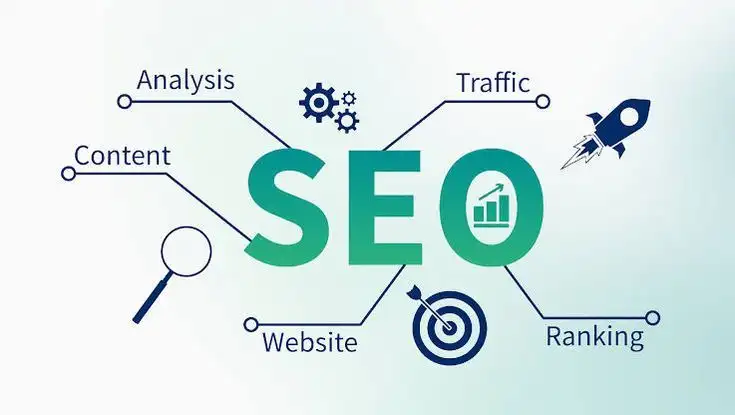
SEO — Search Engine Optimization — is the practice of making a website easier for search engines to crawl, understand, and rank, so it shows up when the right people search for it. That part is simple. What trips people up is realizing SEO isn't one activity. It's a collection of distinct disciplines, each solving a different piece of the visibility problem.
SEO is divided into different types because a single website faces several separate challenges at once: can search engines access it (technical), does each page communicate clearly (on-page), does the wider web vouch for it (off-page), does it serve a specific location or product catalog or language market (local, ecommerce, international), and does it hold up on a phone screen or in a voice assistant (mobile, voice search). No single discipline solves all of these.
These disciplines aren't independent silos — they work together. Technical SEO makes a site crawlable and indexable in the first place. On-page SEO makes individual pages understandable. Content SEO makes those pages genuinely useful. Off-page SEO builds the credibility that tips close competition in your favor. Local SEO layers location relevance on top. None of them substitutes for the others.
There's no single "best" type of SEO — the right mix depends entirely on the business. A local service business in Lucknow needs a very different SEO focus than a multinational SaaS company or a 50,000-SKU ecommerce store. What matters is identifying which disciplines actually move the needle for your specific site, and investing there first.
This also answers a question I get constantly: why doesn't good content and a handful of backlinks guarantee rankings? Because SEO success depends on multiple disciplines functioning together — a technically broken site with excellent content still won't rank, and a fast, well-structured site with thin content won't either. This guide is a hub covering every major type of SEO, with a clear introduction to each. Where a topic deserves its own deep-dive, I've linked out to a dedicated article — that's where the real depth lives.
The Main Types of SEO
Here's the full list covered in this guide, before we go through each one in detail:
On-Page SEO, Off-Page SEO, Technical SEO, Local SEO, Content SEO, Ecommerce SEO, Enterprise SEO, International SEO, Mobile SEO, Image SEO, Video SEO, News SEO, Programmatic SEO, Semantic SEO, Entity SEO, JavaScript SEO, Voice Search SEO, and App Store Optimization (ASO).
1. On-Page SEO
What Is On-Page SEO?
On-page SEO covers everything you control directly within a page's content and code — titles, headings, structure, keyword usage, and internal links — to make that specific page as understandable and relevant as possible to both search engines and readers.
Why On-Page SEO Matters
It's the layer where search intent actually gets answered. A page can be technically flawless and still fail to rank if the on-page signals don't clearly communicate what it's about and why it deserves to rank for a given query.
Important On-Page SEO Elements
Title tags — the clickable headline shown in search results; the single strongest on-page relevance signal
Meta descriptions — the summary snippet under the title; doesn't directly affect rankings but influences click-through rate
Headings — H1 through H6 tags that structure content logically for readers and search engines
URLs — clean, descriptive URLs that reflect the page's topic
Keyword targeting — using target terms naturally within content, not forced or repeated
Search intent — matching the page's format and depth to what the searcher actually wants
Content structure — logical flow that answers the query without unnecessary detours
Internal linking — connecting related pages to spread authority and context
Image optimization — compressed, appropriately sized images
Alt text — descriptive text for images, aiding accessibility and image search
Schema/structured data — markup that explicitly labels content type for search engines
Content quality — depth, accuracy, and originality that genuinely serves the reader
On-Page SEO Example
A page targeting "SEO audit checklist" should have that phrase reflected naturally in its title tag and H1, structured with clear H2/H3 sections covering each audit step, internal links to related guides like technical SEO or Core Web Vitals, and content that actually delivers a usable checklist rather than a vague overview.
→ [Complete On-Page SEO Guide] (internal link)
2. Off-Page SEO
What Is Off-Page SEO?
Off-page SEO covers the signals that build a site's credibility from outside its own pages — primarily backlinks, brand mentions, and reputation across the web.
Why Off-Page SEO Matters
Search engines treat external validation as a trust signal. A site can say anything about itself; off-page SEO is evidence that other credible sources vouch for it.
Major Off-Page SEO Activities
Backlinks — links from other websites pointing to yours
Digital PR — earning coverage and links through newsworthy campaigns or expert commentary
Brand mentions — references to your brand, linked or unlinked
Link building — the deliberate process of earning relevant backlinks
Guest contributions — writing for other credible sites in your niche
Local citations — business listings across directories that reinforce local legitimacy
Online reputation — reviews, sentiment, and how a brand is discussed across the web
Relevant external references — being cited as a source by others in your industry
What Makes a Good Backlink?
Relevance to your topic, the authority and trustworthiness of the linking site, and how naturally the link fits within its surrounding content matter far more than sheer link volume.
Off-Page SEO vs Link Building
Link building is one activity within off-page SEO, not a synonym for it. Off-page SEO also includes reputation, mentions, and citations that don't involve a link at all.
→ [Complete Off-Page SEO Guide] (internal link)
3. Technical SEO
What Is Technical SEO?
Technical SEO ensures a website's infrastructure allows search engines to crawl, render, and index it without friction — the plumbing that everything else depends on.
Crawling
The process by which Googlebot discovers pages by following links and reading sitemaps. Blocked or unlinked pages may never get crawled at all.
Indexing
Once crawled, a page needs to be stored in Google's index to be eligible for ranking — crawling doesn't guarantee indexing.
Website Architecture
How pages are organized and linked to one another, affecting both crawl efficiency and how clearly topical relationships come through.
XML Sitemaps
A file listing a site's important URLs, helping search engines discover pages faster, especially on large or newer sites.
Robots.txt
A file that instructs search engine crawlers which parts of a site they should or shouldn't access.
Canonicalization
Telling search engines which version of duplicate or near-duplicate content is the "primary" one to index and rank.
Redirects
Rules that send users and crawlers from one URL to another, essential during site changes and migrations to preserve rankings.
HTTPS
Secure site encryption, now a baseline expectation for both users and search engines.
Structured Data
Markup (schema.org) that explicitly labels page content — products, articles, reviews, FAQs — helping search engines understand context and enabling rich results.
JavaScript SEO
Managing how JavaScript-rendered content gets crawled, rendered, and indexed, since it requires an extra processing step compared to static HTML.
Core Web Vitals
Google's page experience metrics measuring loading speed (LCP), interactivity (INP), and visual stability (CLS).
Mobile Performance
How well a site loads and functions on mobile devices, critical since Google primarily uses the mobile version of a site for indexing and ranking.
→ [Technical SEO Guide] (internal link) → [Core Web Vitals Guide] (internal link) → [JavaScript SEO Guide] (internal link)
4. Local SEO
What Is Local SEO?
Local SEO is the discipline of ranking for searches tied to a specific location — the backbone of visibility for any Lucknow-based or India-focused local business, including AJAY SEO itself.
How Local SEO Differs From Traditional SEO
It relies on a distinct set of signals — proximity, Google Business Profile data, and local reputation — alongside standard organic ranking factors, and it's evaluated through a separate system (the Local Pack and Maps) as well as regular organic results.
Google Business Profile Optimization
Keeping your free Google listing complete and accurate — categories, hours, services, photos — since it directly powers Maps and Local Pack visibility.
Google Maps SEO
Ranking within Google Maps results, driven by relevance, distance from the searcher, and prominence.
Local Keyword Research
Identifying search terms that include or imply a location, such as "SEO expert in Lucknow."
Local Landing Pages
Dedicated pages built to target specific service areas or cities, useful for businesses serving multiple locations.
NAP Consistency
Keeping your Name, Address, and Phone number identical across your website and every directory listing — inconsistency undermines local trust signals.
Local Citations
Listings of your business on directories and platforms that reinforce legitimacy and local relevance.
Online Reviews
Review volume, recency, and quality directly influence both Local Pack rankings and searcher trust.
Local Link Building
Earning backlinks from local publications, business associations, and community sites relevant to your area.
Local Schema
Structured data marking up business details like address, hours, and service area for clearer local search understanding.
Local Pack Rankings
The map-plus-three-listings block shown for local-intent searches, often the most visible real estate for local businesses.
→ [Complete Local SEO Guide] (internal link)
5. Content SEO
What Is Content SEO?
Content SEO is the practice of planning, creating, and structuring content so it matches what searchers are looking for and demonstrates genuine depth on a topic — the layer that turns technical accessibility into actual rankings.
Search Intent
Understanding whether a searcher wants information, a comparison, or to take an action, and building content that matches.
Keyword Research
Identifying the terms and phrases your audience actually searches, and the demand and competition behind them.
Topic Clusters
Groups of related content pieces organized around a central theme, interlinked to reinforce topical relevance.
Pillar Pages
Broad, comprehensive hub pages — like this one — that introduce a topic and link out to focused supporting articles.
Topical Authority
The degree to which a site is seen as a comprehensive, trustworthy source on a given subject, built through consistent, interlinked coverage over time.
Content Depth
Covering a topic thoroughly enough to genuinely answer a searcher's question, rather than skimming the surface.
Content Freshness
Keeping content updated as facts, best practices, or search results evolve — especially important in fast-moving fields.
Content Pruning
Removing or consolidating outdated, thin, or underperforming pages that drag down overall site quality.
Content Consolidation
Merging multiple overlapping pages into one stronger, more comprehensive piece instead of competing against yourself.
Information Gain
The degree to which a piece of content adds something genuinely new beyond what's already ranking — a concept increasingly relevant as search results converge on similar answers.
First-Hand Experience
Demonstrating direct, practical experience with a topic rather than restating generic advice — a key differentiator search engines and readers both value.
→ [Complete Content SEO Guide] (internal link)
6. Ecommerce SEO
What Is Ecommerce SEO?
Ecommerce SEO applies SEO principles to online stores, where the challenges are different — thousands of similar product pages, filtering systems, and inventory that constantly changes.
Product Page SEO
Optimizing individual product pages with unique titles, descriptions, and clear purchase-relevant information.
Category Page SEO
Making sure category pages target broader commercial keywords and provide enough unique content to avoid being thin.
Product Descriptions
Writing original, specific descriptions rather than reusing manufacturer copy, which creates duplicate content across the web.
Product Schema
Structured data marking up price, availability, and reviews, enabling rich results like star ratings in search.
Product Reviews
Genuine customer reviews that add unique content and trust signals to product pages.
Faceted Navigation
Filter systems (size, color, price) that can generate huge numbers of near-duplicate URLs if not managed carefully.
Ecommerce Internal Linking
Connecting related products, categories, and guides to distribute authority and help customers discover more items.
Out-of-Stock Products
Handling discontinued or temporarily unavailable products correctly, so pages aren't lost or left indexed with poor experience.
Duplicate Product Content
A common ecommerce issue where identical products appear across multiple URLs or sellers, diluting ranking potential.
Ecommerce Technical SEO
Managing crawl budget across large catalogs, pagination, canonicalization of filtered URLs, and site speed at scale.
→ [Complete Ecommerce SEO Guide] (internal link)
7. Enterprise SEO
What Is Enterprise SEO?
Enterprise SEO is the practice of managing SEO across large websites — often thousands or millions of pages — where scale itself becomes the primary challenge.
How Enterprise SEO Differs From Small-Business SEO
It requires systems, processes, and cross-team coordination rather than page-by-page manual optimization, since individual fixes don't scale.
Large-Scale Technical SEO
Managing crawl efficiency, site speed, and indexing health across a massive number of URLs.
Managing Thousands of URLs
Prioritizing which pages deserve optimization effort and which should be consolidated, redirected, or deindexed.
Enterprise Content Strategy
Coordinating content production across multiple teams or departments while maintaining consistency and topical focus.
International Websites
Managing SEO across multiple country or language versions of a large site simultaneously.
Automation
Using tools and scripts to handle optimizations — like schema or metadata — at a scale manual work can't reach.
SEO Governance
Establishing standards, approvals, and workflows so SEO best practices are maintained across large teams and departments.
8. International SEO
What Is International SEO?
International SEO is the practice of optimizing a website to rank in multiple countries and languages, ensuring the right version of a site reaches the right audience.
Multilingual SEO
Optimizing content in multiple languages, including translation quality and language-specific keyword research.
Multi-Country SEO
Targeting different countries that may share a language but have different search behavior, competitors, or intent.
Hreflang
An HTML attribute that tells search engines which language and regional version of a page to show to which users.
Country-Specific URLs
Structuring URLs to clearly signal geographic targeting for a given page or site section.
ccTLD vs Subdirectory vs Subdomain
The three common structures for international sites — a country-code domain, a subdirectory, or a subdomain — each with different SEO and maintenance trade-offs.
International Keyword Research
Researching keywords natively in each target market rather than directly translating terms from one language to another.
Geotargeting
Signaling to search engines which geographic audience a site or section is intended for, through domain structure, hreflang, and Search Console settings.
9. Mobile SEO
What Is Mobile SEO?
Mobile SEO ensures a website performs well on mobile devices, which is now the primary way most users — and Google's crawler — experience the web.
Mobile-First Indexing
Google predominantly uses the mobile version of a site's content for indexing and ranking, even for desktop searches.
Responsive Design
A single site layout that adapts to any screen size, the standard recommended approach for mobile compatibility.
Mobile Page Speed
Load times on mobile networks and devices, which are often slower and more variable than desktop.
Mobile Core Web Vitals
Google evaluates Core Web Vitals using mobile data by default, making mobile performance directly tied to ranking signals.
Mobile Usability
Tap target sizing, readable font sizes, and layout that doesn't require zooming or horizontal scrolling.
Common Mobile SEO Problems
Intrusive interstitials, unplayable content, blocked resources, and text too small to read without zooming.
10. Image SEO
What Is Image SEO?
Image SEO optimizes images so they load efficiently and can be understood and surfaced by search engines, including in Google Images.
Image File Names
Descriptive file names that reflect the image content, rather than generic camera-generated strings.
Alt Text
Descriptive text for each image, serving both accessibility and search engine understanding.
Image Compression
Reducing file size without significantly harming visual quality, directly impacting page speed.
Modern Image Formats
Formats like WebP or AVIF that offer better compression than older formats like JPEG or PNG.
Responsive Images
Serving appropriately sized images for different devices and screen resolutions.
Image Sitemaps
Sitemap entries specifically helping search engines discover images that might not be found through standard crawling.
Image Structured Data
Markup that provides additional context about an image, such as licensing or product association.
How Images Appear in Google Search
Understanding Google Images, image packs within standard search results, and how visual content earns its own visibility.
11. Video SEO
What Is Video SEO?
Video SEO optimizes video content so it can be discovered, understood, and ranked by search engines, both on your own site and platforms like YouTube.
Video Titles
Clear, descriptive titles that reflect both search intent and video content.
Video Descriptions
Detailed descriptions that give search engines context a video file alone can't provide.
Video Structured Data
Markup that helps search engines understand video duration, upload date, and content, enabling rich video results.
Video Sitemaps
Sitemap entries that help search engines discover and index video content on your site.
Video Thumbnails
Custom thumbnails that improve click-through rate from both search results and video platforms.
YouTube SEO vs Google Video SEO
YouTube has its own ranking system separate from Google's general web search, though the two overlap when videos appear in Google's video results.
How Google Understands Video Content
Through metadata, transcripts, structured data, and increasingly, the actual audio and visual content itself.
12. News SEO
What Is News SEO?
News SEO optimizes time-sensitive, journalistic content for visibility in Google News and top stories carousels, where speed and authority matter as much as depth.
Google News
A separate index and set of ranking systems specifically for news publishers, with its own eligibility requirements.
News Sitemap
A specialized sitemap format that helps Google News discover recently published articles quickly.
Article Optimization
Structuring headlines, dates, and bylines clearly for both readers and Google News systems.
Publication Dates
Clear, accurate timestamps that matter significantly for time-sensitive news content.
Newsworthiness
Content that reflects genuinely current, relevant events rather than evergreen information framed as news.
E-E-A-T for News Content
Experience, Expertise, Authoritativeness, and Trustworthiness are especially scrutinized for news, given its potential real-world impact.
13. Programmatic SEO
What Is Programmatic SEO?
Programmatic SEO is the practice of generating large numbers of pages from structured data using templates, rather than writing each page manually — common for directories, comparison tools, and location-based pages.
How Programmatic SEO Works
A dataset (locations, products, categories) is combined with a page template to automatically produce many similar, structured pages at scale.
Database-Driven Pages
Pages populated dynamically from a structured database rather than written individually.
Template-Based Pages
A consistent page layout and structure applied across large sets of similar content.
Programmatic Keyword Research
Identifying keyword patterns that scale — like "[service] in [city]" — that can be systematically targeted across many pages.
Risks of Programmatic SEO
Producing large volumes of thin, low-differentiation pages that add little unique value, which Google's systems are specifically designed to identify.
Thin and Low-Value Programmatic Pages
Pages that follow a template without enough unique data or content to justify a separate URL.
When Programmatic SEO Makes Sense
When each generated page genuinely offers unique, useful data — not just a swapped variable in otherwise identical content.
14. Semantic SEO
What Is Semantic SEO?
Semantic SEO focuses on meaning and context rather than exact keyword matches — optimizing for the concepts and relationships behind a topic, not just the words used to search for it.
Semantic Search
Google's ability to understand the intent and contextual meaning behind a query, beyond literal keyword matching.
Topics vs Keywords
Structuring content around a full topic and its related subtopics, rather than a single target keyword in isolation.
Entities
Distinct, identifiable things — people, places, brands, concepts — that search engines recognize and understand relationships between.
Entity Relationships
How different entities connect to one another, which search engines use to build a broader understanding of a topic.
Context and Relevance
How well content's surrounding information supports and reinforces its core topic.
Semantic Content Optimization
Writing content that naturally covers related concepts and terminology, rather than repeating one exact phrase.
Building Topical Authority
Demonstrating comprehensive coverage of a subject area through interlinked, semantically related content over time.
15. Entity SEO
What Is Entity SEO?
Entity SEO is the practice of establishing your brand, or key concepts on your site, as clearly recognized "entities" that search engines can confidently identify and connect to relevant topics.
Entities vs Keywords
A keyword is a search term; an entity is a distinct real-world thing search engines can identify with a defined meaning, independent of the specific words used to refer to it.
How Search Engines Understand Entities
Through consistent naming, structured data, mentions across the web, and relationships to other known entities.
Entity Relationships
The connections search engines draw between entities — for example, associating a brand with its founder, location, and service category.
Knowledge Graph
Google's system for storing structured information about entities and their relationships.
Knowledge Panels
The information boxes Google sometimes displays for well-established entities, drawn from Knowledge Graph data.
Entity-Based Content
Content built around clearly defined entities and their relationships, rather than loosely themed keyword targeting.
Building a Strong Brand Entity
Achieved through consistent naming, structured data, citations, and mentions that reinforce who you are and what you're known for.
16. JavaScript SEO
What Is JavaScript SEO?
JavaScript SEO addresses the specific challenges of making JavaScript-rendered websites fully crawlable, renderable, and indexable by search engines.
How Search Engines Process JavaScript
Google crawls JavaScript pages in two phases — an initial crawl of raw HTML, followed by a separate rendering phase to execute the JavaScript and see the final content.
Client-Side Rendering
Content that's built in the browser using JavaScript after the initial page load, which requires that extra rendering step to be understood.
Server-Side Rendering
Content rendered on the server before being sent to the browser, arriving as complete HTML that's easier for search engines to process immediately.
Dynamic Rendering
Serving a pre-rendered version of a page specifically to search engine crawlers while users get the standard JavaScript version.
Common JavaScript SEO Problems
Content that never renders in time for indexing, broken internal links generated by JavaScript, and delayed or blocked resource loading.
How to Test JavaScript SEO
Using tools like Google Search Console's URL Inspection to confirm what Google actually sees after rendering a page.
→ [JavaScript SEO Guide] (internal link)
17. Voice Search SEO
What Is Voice Search SEO?
Voice search SEO optimizes content for spoken queries through voice assistants, which tend to be longer, more conversational, and more question-based than typed searches.
Conversational Queries
Natural, spoken-language phrasing rather than the shorter fragments typical of typed search.
Question-Based Searches
Queries phrased as full questions — "what," "how," "why" — which voice search naturally favors.
Local Voice Search
A large share of voice queries have local intent, such as asking for the nearest business or service.
Featured Snippets and Voice Search
Voice assistants frequently pull answers from featured snippets, making that ranking position especially valuable for voice visibility.
Optimizing Content for Conversational Queries
Structuring content with clear, direct answers to likely spoken questions, often near the top of a section.
18. App Store Optimization (ASO)
What Is ASO?
App Store Optimization improves an app's visibility and conversion rate within app store search results — a related but distinct discipline from website SEO.
SEO vs ASO
SEO optimizes for Google and other web search engines; ASO optimizes specifically for the search and ranking systems inside Google Play and the Apple App Store.
Google Play Optimization
Optimizing title, description, and metadata specifically for Android's app marketplace algorithm.
App Store Optimization
The equivalent process for Apple's App Store, which weighs metadata and ranking factors differently than Google Play.
App Title and Description
Keyword-relevant naming and description copy that both search algorithms and potential users respond to.
App Reviews and Ratings
A major ranking and conversion factor within app stores, similar to how reviews function in local SEO.
Note: ASO isn't technically a type of website SEO — it's a related search-visibility discipline with its own separate ranking systems, included here because the underlying optimization thinking overlaps closely with SEO.
Advanced SEO Disciplines
Beyond the core types above, a few more specialized disciplines are worth knowing — most get their own dedicated deep-dive on this site.
Image SEO
Covered in full above — optimizing visual content for search discovery and page performance.
Video SEO
Covered in full above — optimizing video content for both web search and platform-native discovery.
Semantic SEO
Covered in full above — optimizing for meaning and topical relationships rather than exact keyword matches.
Entity SEO
Covered in full above — establishing your brand or key concepts as clearly recognized entities.
JavaScript SEO
Covered in full above — ensuring JavaScript-rendered content is fully crawlable and indexable.
Programmatic SEO
Covered in full above — generating large sets of structured, template-based pages at scale.
Parasite SEO
Publishing content on high-authority third-party platforms (like established publishers or forums) to rank quickly by borrowing their existing domain trust, rather than building authority on your own site.
Edge SEO
Implementing SEO changes — like redirects or metadata rules — at the CDN or edge-server level, bypassing the need to modify the underlying codebase directly.
Log-File SEO
Analyzing server log files to see exactly how search engine crawlers actually behave on a site, rather than relying on assumptions or simulated crawls.
Migration SEO
Managing the SEO risks and requirements of a site migration — domain changes, URL restructuring, or platform moves — to preserve existing rankings.
Recovery SEO
Diagnosing and reversing a significant traffic or ranking drop, often following an algorithm update or manual action.
SEO Automation
Using scripts, tools, and workflows to handle repetitive SEO tasks — like schema generation or metadata audits — at scale.
→ [Parasite SEO, Edge SEO & Log-File SEO Explained] (internal link — future article) → [SEO Migration and Recovery Guide] (internal link — future article)
White Hat vs Black Hat vs Gray Hat SEO
What Is White Hat SEO?
SEO practices that align with search engine guidelines, focused on genuinely improving user experience and content quality — the sustainable, long-term approach.
What Is Black Hat SEO?
Tactics that violate search engine guidelines to manipulate rankings, often producing short-term gains at the risk of severe penalties.
What Is Gray Hat SEO?
Tactics that fall in a murky middle ground — not explicitly against guidelines, but pushing boundaries in ways that carry meaningful risk.
Examples of Black Hat SEO
Keyword stuffing — unnatural repetition of keywords purely for algorithmic manipulation
Cloaking — showing different content to search engines than to users
Link schemes — buying, exchanging, or artificially manufacturing backlinks
Hidden text — text invisible to users but readable by crawlers, aimed at manipulation
Doorway abuse — pages built purely to funnel search traffic toward another destination
Scaled content abuse — mass-producing low-value content, often AI-generated, purely to manipulate rankings
Why Risky SEO Tactics Can Backfire
Google's systems are specifically built to detect manipulation patterns, and manual penalties or algorithmic demotions can undo months or years of legitimate work almost overnight — the short-term gain rarely justifies the risk.
How Different Types of SEO Work Together
SEO disciplines aren't separate boxes to check — they build on each other in sequence:
Technical SEO → makes the site accessible and crawlable On-Page SEO → helps search engines understand each page Content SEO → provides useful information matching search intent Off-Page SEO → builds external authority and reputation Local SEO → improves visibility for location-based searches Analytics → measures the results and feeds back into the strategy
A weakness at any stage limits everything that follows — flawless content on a site Google can't crawl still won't rank, and a fast, well-structured site with thin content won't either.
Which Type of SEO Does Your Business Need?
Local Business
→ Local SEO + On-Page SEO + Technical SEO
Ecommerce Website
→ Ecommerce SEO + Technical SEO + Content SEO
SaaS Business
→ Technical SEO + Content SEO + Programmatic SEO
Enterprise Website
→ Enterprise SEO + Technical SEO + International SEO
Personal Brand
→ Content SEO + Entity SEO + On-Page SEO
Multinational Business
→ International SEO + Technical SEO + Content SEO
Types of SEO: Quick Comparison
| SEO Type | Primary Goal |
|---|---|
| On-Page SEO | Improve individual pages |
| Technical SEO | Improve crawling, indexing and technical accessibility |
| Off-Page SEO | Build external authority and reputation |
| Local SEO | Improve local search visibility |
| Content SEO | Create content aligned with search needs |
| Ecommerce SEO | Improve product/category visibility |
| Enterprise SEO | Manage SEO at large scale |
| International SEO | Target multiple countries/languages |
| Mobile SEO | Improve mobile search experience |
| Image SEO | Improve image visibility |
| Video SEO | Improve video visibility |
| Semantic SEO | Improve topical/contextual relevance |
| Entity SEO | Strengthen entity understanding |
| JavaScript SEO | Make JS-based websites accessible to search engines |
| Programmatic SEO | Create scalable search-focused pages |
Frequently Asked Questions
Conclusion
SEO isn't a single technique you apply once — it's an ecosystem of disciplines that each solve a different part of the visibility problem. The path from an inaccessible website to consistent organic rankings generally follows one direction:
Technical foundation → Content & relevance → On-page optimization → Authority → Local/vertical optimization → Measurement
Skipping a stage doesn't just weaken that layer — it caps what every layer after it can achieve. The businesses that get real, lasting SEO results are the ones that treat these disciplines as connected, not as a checklist to pick and choose from.
At AJAY SEO, I build strategies around whichever combination of these disciplines actually matches a business's situation — not a one-size-fits-all package. If you're not sure which types of SEO your website actually needs, that's exactly what a proper audit is for.
Not sure where your website stands? [Get a Free SEO Audit →]

Ajay Yadav
Digital Marketing ExpertDigital Marketing Expert with 3+ years of experience helping businesses grow through SEO, Ads, and Content Marketing.