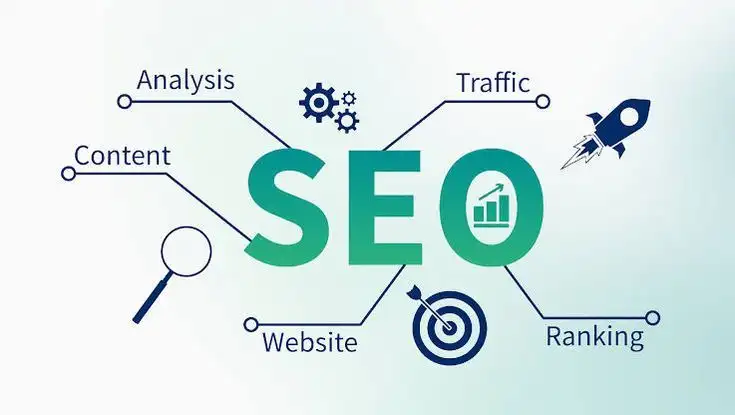
Most SEO reporting stops at "rankings went up." That's not measurement — it's a snapshot. Real SEO measurement traces a full path: Visibility → Traffic → Engagement → Conversions → Revenue. If you can't connect a ranking improvement to something that actually moved your business forward, you don't yet know whether your SEO is working.
SEO KPIs and SEO metrics get used interchangeably, but they're not the same thing. A metric is any number you can measure. A KPI is a metric tied to a specific business goal — chosen deliberately, not just because a tool reports it. This distinction matters more than it sounds, because most SEO dashboards are full of metrics and short on actual KPIs.
Different businesses need different KPIs. A local service business in Lucknow cares about calls and direction requests. An ecommerce store cares about organic transactions and revenue. Tracking the wrong numbers — or tracking everything with no priority — makes SEO reporting noisy and disconnected from what the business actually needs.
This guide is a hub: every metric and KPI relevant to SEO gets a clear, practical introduction here, with dedicated deep-dive articles linked where the topic deserves fuller treatment.
What Is an SEO KPI?
What Does KPI Mean?
KPI stands for Key Performance Indicator — a metric specifically chosen because it reflects progress toward a defined business goal, not just activity.
What Is an SEO Metric?
An SEO metric is any measurable data point related to search performance — clicks, impressions, rankings, backlinks, load speed, and so on. Metrics describe what's happening; not every metric is worth building a decision around.
KPI vs Metric: What's the Difference?
Every KPI is a metric, but not every metric is a KPI. Organic sessions is a metric. Organic leads generated per month, tracked against a target, is a KPI. The difference is intent — a KPI is selected because it's tied to a goal you're accountable for.
Why Different Businesses Need Different SEO KPIs
A law firm's KPI might be qualified consultation bookings. An ecommerce brand's KPI might be organic revenue. Applying the same KPI set across every business type produces reports that look busy but don't answer the question that actually matters to that business.
Leading vs Lagging SEO Indicators
Leading indicators (impressions, rankings, indexed pages) tend to move first and hint at future results. Lagging indicators (revenue, customers, ROI) confirm whether that early movement actually mattered. Good SEO reporting tracks both — leading indicators for early signal, lagging indicators for proof.
The Most Important SEO KPIs at a Glance
Before going deep on each one, here's the full set this guide covers: organic traffic, organic clicks, organic impressions, CTR, keyword rankings, organic conversions, organic revenue, backlinks, referring domains, indexation, Core Web Vitals, and local search visibility. Each gets its own section below — treat this as your map of the guide.
1. Organic Traffic
What Is Organic Traffic?
Organic traffic is the number of visits a website receives from unpaid search engine results — as distinct from paid ads, social, referral, or direct traffic.
Why Organic Traffic Matters
It's usually the clearest top-of-funnel signal that SEO work is having an effect, since it reflects actual people reaching your site through search rather than just ranking positions.
Organic Users vs Organic Sessions
Users count unique visitors over a period; sessions count total visits, including repeat visits from the same person. A spike in sessions without a matching rise in users can mean the same people are returning often, not that reach is growing.
New vs Returning Organic Users
New users indicate fresh discovery through search; returning users suggest the content or brand is earning repeat visits — a signal of trust and relevance.
Organic Traffic Growth Rate
The percentage change in organic traffic over a defined period, typically month-over-month or year-over-year. Useful for spotting trend direction rather than single-point performance.
Traffic by Landing Page
Breaking organic traffic down by which page received the visit shows exactly which content is doing the acquisition work — critical for deciding where to invest further.
Traffic by Device
Comparing mobile vs desktop organic traffic can reveal usability or Core Web Vitals issues specific to one device type.
Traffic by Country
Especially relevant if you serve both Lucknow/India-specific and broader audiences — segmenting by country avoids conflating local and national performance.
Is More Organic Traffic Always Better?
No. Relevant traffic is worth far more than raw volume. A page attracting thousands of visitors with the wrong intent generates activity, not business results — while a page bringing five hundred visitors actively looking for your exact service can outperform it on every metric that matters.
Deep dive: [Understanding and Analyzing Organic Traffic] (internal link — future article)
2. Organic Impressions
What Is a Search Impression?
An impression is counted when your page appears in a search result a user could have seen — regardless of whether they clicked it.
How Google Search Console Measures Impressions
Search Console logs an impression whenever your URL appears on a results page the user viewed, including positions the user may have scrolled past without clicking.
Why Impressions Can Increase Before Traffic
Rising impressions often show up before rising clicks — Google is starting to surface a page for more queries, even if it hasn't yet earned a strong enough position or title to convert that visibility into clicks.
What Increasing Impressions Can Tell You
It's an early signal that a page's topical relevance or indexing has expanded — useful for spotting content gaining traction before rankings fully mature.
Impression Growth vs Business Growth
Impressions reflect visibility potential, not results. A page can gain massive impression volume from irrelevant queries and never generate a lead — this is a leading indicator, not proof of business impact.
3. Organic Clicks
What Is an Organic Click?
A click recorded when a user selects your listing from an unpaid search result.
Clicks vs Impressions
Impressions measure exposure; clicks measure actual interest. A page can have high impressions and low clicks — usually a sign the listing isn't compelling enough at its current position, even if the topic is relevant.
How to Measure Organic Click Growth
Track total clicks over time in Search Console, ideally segmented by page or query group rather than as one aggregate number.
Why Clicks Alone Don't Tell the Full Story
Clicks show interest, not outcome. Without connecting clicks to what happens after — engagement, conversion — this metric only tells half the story.
4. Organic Click-Through Rate (CTR)
What Is Organic CTR?
The percentage of people who click your listing after seeing it in search results.
CTR Formula
CTR = Clicks ÷ Impressions × 100
What Influences Organic CTR?
Ranking position — higher positions naturally capture more clicks
Title tag — how compelling and relevant it reads at a glance
Search intent match — whether the listing appears to answer what the searcher wants
SERP features — featured snippets or rich results above your listing can absorb clicks
Brand recognition — familiar brands earn clicks even from lower positions
Meta description — supporting context that can tip a click decision
Rich results — star ratings, FAQs, or other enhanced listings tend to outperform plain ones
How to Improve Organic CTR
Rewrite title tags to be specific and intent-matched rather than generic, add meta descriptions that clarify value, and target rich result eligibility through structured data where relevant.
Why CTR Should Be Analyzed by Query and Position
Average CTR across a whole site is close to meaningless — CTR expectations shift enormously by position and by query type, so it should always be reviewed in that context, not as a single flat number.
5. Keyword Rankings
What Is Keyword Ranking?
The position a specific page holds in search results for a specific query, on a given day, for a given searcher context.
Average Position
The mean ranking position for a page or keyword set, as reported in Search Console — useful for trend tracking, though it blends variation across many individual queries.
Top 3, Top 10, Top 20, Top 50 and Top 100 Rankings
Grouping keywords by ranking tier (rather than tracking exact position) gives a clearer view of overall visibility health and where keywords are clustering.
New Ranking Keywords
Keywords a page has newly started ranking for — a sign of expanding topical relevance or fresh indexing.
Lost Keywords
Keywords a page has dropped out of rankings for — worth investigating for content decay, technical issues, or a competitor outranking you.
Improving vs Declining Keywords
Comparing keyword movement over a period highlights whether overall visibility trend is positive or negative, beyond any single keyword's fluctuation.
Why Rankings Alone Are Not an SEO KPI
Rankings are a leading indicator, not a business outcome. Position #1 for a keyword nobody searches, or one that doesn't convert, delivers nothing. Rankings matter only in combination with traffic, relevance, and conversion data.
Deep dive: [How to Track and Interpret Keyword Rankings] (internal link — future article)
6. Keyword Visibility
What Is Search Visibility?
A composite score, calculated by third-party SEO tools (not Google), estimating what share of possible search traffic a domain could capture based on its current rankings.
How Visibility Is Calculated by SEO Tools
Tools like Ahrefs or Semrush combine ranking positions and estimated search volume across a tracked keyword set into a single visibility index — methodology varies by tool, so scores aren't directly comparable across platforms.
Top 3 Visibility / Top 10 Visibility
Visibility scores segmented to just the highest-value ranking tiers, since positions beyond page one capture disproportionately less traffic.
Visibility Growth
Tracking the visibility score over time shows overall ranking trend across an entire tracked keyword set, rather than individual keyword movement.
Visibility vs Traffic
Visibility is an estimate; traffic is measured fact. Rising visibility should generally correlate with rising traffic — when it doesn't, it's worth checking whether the tracked keyword set still reflects real business-relevant queries.
7. Branded vs Non-Branded Organic Traffic
What Is Branded Search?
Searches that include your brand name directly — for example, "AJAY SEO."
What Is Non-Branded Search?
Searches for your service or topic without your brand name — for example, "SEO expert in Lucknow."
Why Non-Branded Traffic Matters for Customer Acquisition
Branded traffic reflects people who already know you; non-branded traffic reflects genuine new customer acquisition through search — usually the more important growth signal for a growing brand.
Measuring Brand Search Growth
Segmenting Search Console queries into branded and non-branded groups makes it possible to see whether SEO is actually expanding reach or simply capturing people who were already looking for you by name.
8. Organic Landing Page Performance
What Is an SEO Landing Page?
Any page that receives organic search visits — not just a dedicated "landing page" in the marketing sense.
Organic Traffic, Clicks, Impressions, CTR, Rankings, and Conversions by Page
Breaking each core metric down at the page level, rather than site-wide, is what turns raw numbers into decisions — it shows exactly which pages to improve, replicate, or retire.
Finding Your Highest-Performing SEO Pages
Cross-reference traffic, CTR, and conversions by page to identify a small set of pages doing most of the work — typically a minority of pages drive the majority of organic results.
9. Engagement Metrics for SEO
What Is Engagement Rate?
In GA4, the percentage of sessions that lasted longer than 10 seconds, included a conversion event, or had two or more pageviews.
Engaged Sessions / Average Engagement Time / Pages Per Session
These describe how meaningfully visitors interacted with a page once they arrived — useful for spotting content that attracts clicks but fails to hold attention.
Scroll and Interaction Events
Custom-tracked events (scroll depth, button clicks, video plays) that show deeper engagement than pageviews alone can capture.
Engagement by Landing Page
Segmenting engagement metrics by page highlights which content genuinely satisfies the visitor versus which pages see quick exits.
Does Engagement Directly Affect Google Rankings?
Google has not confirmed that engagement metrics like time-on-page are direct ranking factors. What's better documented is the practical link: pages that engage visitors tend to also be pages that better satisfy search intent — which is what actually correlates with rankings. Treat engagement as a content-quality diagnostic, not a lever you're pulling to directly move rankings.
10. Bounce Rate
What Is Bounce Rate?
The percentage of sessions with no engagement — no second pageview, no conversion event, and a duration under the engagement threshold.
How Bounce Rate Is Calculated
GA4 calculates it as the inverse of engagement rate: sessions that didn't meet the engagement criteria, divided by total sessions.
Why Bounce Rate Can Be Misleading
A visitor who lands on a page, finds their answer immediately, and leaves satisfied can register as a "bounce" — the metric can't distinguish a fully satisfied visit from a genuinely poor one.
High Bounce Rate vs Bad SEO
A high bounce rate isn't automatically a problem. It becomes worth investigating only alongside other signals — low conversions, short time-on-page, or a mismatch between the page's content and the query it ranks for.
When Bounce Rate Is Worth Investigating
When it's unusually high relative to similar pages on your own site, or paired with declining conversions on a page that should be converting. It is not a confirmed Google ranking factor and shouldn't be treated as one.
11. Organic Conversions
What Is an Organic Conversion?
Any defined, valuable action completed by a visitor who arrived through organic search — the point where SEO traffic starts translating into business value.
Form Submissions, Phone Calls, WhatsApp Clicks, Consultation Bookings, Purchases, Account Registrations, Downloads
Each represents a different conversion type depending on business model — a service business might prioritize calls and WhatsApp enquiries, while an ecommerce site prioritizes purchases.
Why Conversions Matter More Than Traffic
Traffic without conversions doesn't grow a business. This is the metric that separates SEO activity from SEO results — everything above this section builds toward this number.
Deep dive: [Tracking Organic Conversions Correctly] (internal link — future article)
12. Organic Conversion Rate
What Is Organic Conversion Rate?
Organic Conversion Rate = Organic Conversions ÷ Organic Users × 100
How to Measure Organic Conversion Rate
Set up conversion tracking in GA4 (or your analytics platform) tied specifically to the organic traffic channel, then calculate the ratio over a consistent period.
Conversion Rate by Landing Page
Reveals which pages are efficient at turning visitors into leads or customers — often more useful than raw traffic volume when prioritizing content updates.
Conversion Rate by Keyword Intent
Transactional and commercial-investigation queries typically convert at meaningfully higher rates than informational ones — segmenting by intent avoids diluting the picture.
Conversion Rate by Device
Mobile and desktop conversion rates often differ significantly, frequently pointing to mobile usability issues when the gap is large.
13. Organic Leads
What Is an Organic Lead?
A person who takes an initial contact action — enquiry, call, form fill — after arriving through organic search, before they've become a paying customer.
Marketing Leads vs Qualified Leads
Not every lead is equal. A marketing lead is any contact captured; a qualified lead has been assessed as a realistic fit for the business. Reporting on raw lead volume without this distinction overstates SEO performance.
Organic Lead Quality
Best assessed by tracking what happens to leads after capture — how many convert to paying customers, not just how many were generated.
Cost Per Organic Lead
Total SEO investment divided by the number of organic leads generated over the same period — a practical way to compare SEO efficiency against other channels.
Lead-to-Customer Rate
The percentage of organic leads that eventually become paying customers — arguably the most honest measure of whether SEO is bringing in the right kind of traffic, particularly important for service businesses.
14. Organic Revenue
What Is Organic Revenue?
Revenue directly attributable to visitors who arrived through organic search.
Ecommerce Revenue From Organic Search
Tracked directly through ecommerce analytics tied to the organic channel — typically the cleanest revenue attribution available in SEO.
Revenue From Organic Leads
For service businesses, this requires connecting CRM or sales data back to the lead's original organic source — messier than ecommerce tracking but essential for an honest picture.
Revenue Attribution Challenges
Multi-touch customer journeys make it hard to credit a single channel with certainty — someone might discover you organically, return via a branded search weeks later, then convert.
First-Click vs Last-Click Attribution
First-click attribution credits organic search if it started the journey; last-click credits whichever channel was used immediately before conversion. Neither model is fully accurate alone — many businesses look at both to understand SEO's real contribution.
15. SEO ROI
What Is SEO ROI?
SEO ROI = (SEO-Generated Revenue − SEO Investment) ÷ SEO Investment × 100
How to Calculate SEO ROI
Total the cost of SEO work (time, tools, content, technical fixes) over a period, subtract it from the revenue attributed to organic search in that same period, then divide by the investment.
SEO ROI for Ecommerce
Generally the most straightforward to calculate, since ecommerce platforms track organic-attributed revenue directly.
SEO ROI for Lead Generation
Requires connecting lead source data through to actual closed deals — meaning ROI here depends on sales team data, not just website analytics.
Why SEO ROI Can Be Difficult to Measure
Long sales cycles, multi-touch journeys, and delayed conversions (someone finds you organically today, buys three months later) all make clean attribution genuinely hard — treat ROI figures as informed estimates, not exact accounting.
Lifetime Customer Value and SEO
Factoring in how much a customer is worth over their full relationship — not just their first purchase — often makes SEO ROI look considerably stronger than a first-purchase-only view suggests.
16. Cost Per Organic Lead
What Is Cost Per Organic Lead?
SEO Cost ÷ Organic Leads
Why Cost Per Lead Matters
It's the number that lets SEO be compared apples-to-apples against paid channels when deciding where to invest marketing budget.
Comparing SEO CPL With Paid Advertising
SEO typically has a higher upfront cost per lead early on, but that cost tends to fall over time as content and rankings compound — unlike paid ads, where cost per lead stays roughly constant as long as spending continues.
Reducing SEO Acquisition Costs
Usually achieved by improving conversion rate on existing traffic, rather than only chasing more traffic — often the faster and cheaper lever to pull.
17. Customer Acquisition Cost From SEO
What Is SEO CAC?
The total SEO investment divided by the number of actual paying customers acquired through organic search — one step further down the funnel than cost per lead.
SEO Investment vs Customers Acquired
This ratio only becomes meaningful once lead-to-customer tracking is in place; without it, CAC is guesswork.
Comparing SEO CAC With Google Ads CAC
SEO CAC often starts higher but declines over time as organic assets keep performing without ongoing spend, while paid CAC stays tied to continuous budget.
Why Customer Quality Matters
A lower CAC isn't automatically better if those customers have lower lifetime value or higher churn — CAC should always be read alongside customer quality, not in isolation.
18. Indexed Pages
What Is Indexation?
The process by which Google stores a crawled page in its index, making it eligible to appear in search results.
Indexed vs Non-Indexed Pages
Not every page you publish ends up indexed — Google evaluates whether a page is unique and valuable enough to include.
Index Coverage
The Search Console report showing which of your submitted pages are indexed, and the specific reasons behind any that aren't.
Why Some Pages Aren't Indexed
Common causes include thin content, duplication, noindex tags, canonical conflicts, or Google simply judging the page not valuable enough relative to similar content.
Crawled but Not Indexed vs Discovered but Not Indexed
"Crawled — currently not indexed" means Google visited the page and chose not to include it; "Discovered — currently not indexed" means Google found the URL but hasn't crawled it yet, often due to crawl budget prioritization.
Is More Indexed Content Always Better?
No. Indexing pages that are thin or low-value can dilute overall site quality signals rather than help. Indexation should be reviewed for quality of coverage, not just quantity.
Deep dive: [Crawlability and Indexability Explained] (internal link — future article)
19. Crawlability & Crawl Metrics
Crawlability
Whether search engine bots can access and read a page at all — the prerequisite for every other metric in this guide.
Crawl Budget
The number of pages Google is willing to crawl on a given site within a given timeframe — more relevant for large sites than small ones, but still worth understanding early.
Crawl Requests, Crawl Response Time, Crawl Errors, Crawl Statistics
Reported in Search Console's Crawl Stats — these show how efficiently Googlebot is able to move through your site and flag technical friction points like slow server responses or repeated errors.
Crawl Traps
Structural issues — like infinite URL parameters or faceted navigation — that cause Googlebot to waste crawl activity on low-value or duplicate URL variations instead of your important pages.
Deep dive: [Crawlability and Indexability Explained] (internal link — future article)
20. Core Web Vitals
What Are Core Web Vitals?
A set of Google-defined page experience metrics measuring loading speed, interactivity, and visual stability — confirmed by Google as part of its page experience signals.
LCP — Largest Contentful Paint
Measures how long it takes for the largest visible content element on a page to load. Slower LCP generally reflects a page that feels slow to a visitor.
INP — Interaction to Next Paint
Measures how responsive a page is to user interactions — clicks, taps, key presses — throughout the entire visit, having replaced the older First Input Delay metric.
CLS — Cumulative Layout Shift
Measures unexpected visual movement on a page, like buttons shifting right as you're about to tap them, which Core Web Vitals penalizes as poor experience.
What Is a "Good" Core Web Vitals Result?
Google publishes specific pass/fail thresholds for each metric, viewable per-URL in PageSpeed Insights and site-wide in Search Console's Core Web Vitals report.
How to Monitor Core Web Vitals
Through Search Console for real-user field data, and PageSpeed Insights or Lighthouse for lab-based diagnostics during development.
Why Core Web Vitals Shouldn't Be Treated as the Entire SEO Strategy
Google has confirmed page experience is one of many ranking considerations, not the dominant one. A technically perfect Core Web Vitals score on thin or irrelevant content still won't rank well.
Deep dive: [Core Web Vitals Explained: LCP, INP, CLS & TTFB] (internal link — future article)
21. Other Website Performance Metrics
TTFB — Time to First Byte
How long the browser waits for the first byte of response from the server — a strong indicator of server and hosting performance.
FCP — First Contentful Paint
When the first piece of content becomes visible to the user, distinct from LCP's "largest" content marker.
Total Blocking Time
How long the main thread was blocked during page load, preventing the page from responding to input — a lab-data proxy related to the INP experience.
Speed Index
A visual metric showing how quickly page content is visually populated during load, used mainly in lab testing tools like Lighthouse.
Server Response Time, JavaScript Execution Time, Long Tasks, Render-Blocking Resources
Technical diagnostics that explain why a page is slow — heavy scripts, unoptimized server configuration, or resources that delay rendering — each pointing to a different fix.
Deep dive: [Core Web Vitals Explained: LCP, INP, CLS & TTFB] and [Technical SEO: A Practical Guide] (internal links)
22. Backlink Metrics
Total Backlinks
The raw count of links pointing to your site — a volume metric that says little on its own without quality context.
Referring Domains
The number of unique domains linking to you — generally a stronger authority signal than raw backlink count, since ten links from one domain carry far less weight than links from ten different relevant sites.
New Backlinks / Lost Backlinks
Tracking link acquisition and loss over time shows whether off-page authority is trending up or eroding.
Follow vs Nofollow Links
Followed links typically pass more ranking value; nofollow links (and similar attributes like sponsored or UGC) generally don't, though they can still drive referral traffic and brand exposure.
Link Relevance and Link Quality
A link from a site genuinely related to your industry carries more weight than one from an unrelated site — quality and topical fit matter more than sheer link count.
Anchor Text Distribution
The variety of text used in links pointing to your site — a natural, varied anchor profile is a healthier signal than heavily repeated exact-match anchors, which can look manipulative.
Deep dive: [Off-Page SEO and Link Building Explained] (internal link)
23. Referring Domains
What Is a Referring Domain?
A unique website linking to yours, regardless of how many individual links come from it.
Referring Domains vs Backlinks
A site can have thousands of backlinks from a handful of domains — referring domain count gives a truer picture of how broadly your authority is recognized across the web.
Why Domain Diversity Matters
A wide base of relevant referring domains is harder to fake and generally reflects more genuine authority than concentrated links from few sources.
Relevant vs Irrelevant Referring Domains
A referring domain in your industry or niche carries more SEO value than an unrelated one, even if the unrelated domain has higher general authority.
Tracking Referring-Domain Growth
Monitored over time through backlink tools to assess whether off-page efforts (digital PR, outreach, mentions) are actually expanding your link footprint.
24. Internal Linking Metrics
Number of Internal Links
How many internal links point to a given page — pages with very few internal links are harder for both users and Google to find and prioritize.
Internal Link Distribution
Whether link equity is spread sensibly across a site or concentrated on just a handful of pages while important content is under-linked.
Orphan Pages
Pages with no internal links pointing to them at all — often invisible to both crawlers and users despite being published.
Click Depth
How many clicks it takes to reach a page from the homepage — pages buried deep in the site structure tend to get crawled and ranked less effectively.
Anchor Text
The clickable text used in internal links — descriptive, relevant anchor text helps both users and Google understand what the linked page is about.
Important Pages With Too Few Internal Links
A common audit finding: commercially important pages (like service pages) sometimes receive fewer internal links than blog posts, which undersells their importance to Google.
Broken Internal Links
Internal links pointing to pages that no longer exist or have moved — wasted link equity and a poor user experience.
Deep dive: [Internal Linking Strategy for SEO] (internal link — future article)
25. Content SEO Metrics
Content Traffic, Rankings, CTR, Conversions, Engagement
The same core metrics covered earlier in this guide, but reviewed specifically at the content or blog-post level to assess which articles are actually contributing to SEO goals.
Content Decay
The gradual decline in traffic or rankings a piece of content experiences over time as it becomes outdated or competitors publish stronger resources — a key reason ongoing content maintenance matters as much as publishing new content.
Content Freshness
How recently a page has been meaningfully updated — not just a changed date stamp, but genuinely refreshed information, which can help content stay competitive for time-sensitive topics.
Content Update Performance
Measuring traffic and ranking changes before and after a content refresh to assess whether the update actually improved performance.
Content Cannibalization
When multiple pages on the same site compete for the same query, splitting relevance signals between them instead of consolidating authority into one strong page.
Topical Coverage
How comprehensively a site covers a subject area across multiple interlinked pages — a core driver of topical authority, and the reasoning behind building hub-and-spoke content structures like this one.
Deep dive: [Content Decay and Content Refresh Strategy] (internal link — future article)
26. Local SEO KPIs
Local Pack Rankings
Whether and where a business appears in the map-plus-three-listings block for local-intent searches.
Google Maps Visibility
How often and how prominently a business appears in Google Maps results, separate from the Local Pack embedded in regular search.
Google Business Profile Views
How often your GBP listing itself is viewed, across both Search and Maps.
Website Visits, Calls, Direction Requests, Messages From GBP
The direct customer actions Google Business Profile enables — often the most immediate, high-intent conversions in local SEO.
Review Growth and Average Rating
Both the pace of new reviews and the overall rating trend, both of which influence Local Pack visibility and searcher trust.
Local Keyword Rankings
Rankings tracked specifically for location-modified queries — "SEO expert in Lucknow" rather than "SEO expert" alone.
Local Citation Accuracy
Whether your business name, address, and phone number are listed consistently across directories — inconsistency can undermine local trust signals.
Deep dive: [Local SEO: The Complete Guide for Indian Businesses] (internal link)
27. Google Business Profile Metrics
Search Visibility and Maps Visibility
GBP's own performance data, showing how often your listing appeared in Search versus Maps specifically.
Calls, Website Clicks, Direction Requests
The core measurable customer actions taken directly from your GBP listing.
Customer Actions
The aggregated view of all engagement types GBP tracks, useful for a single at-a-glance performance summary.
Review Performance
Review count, rating trend, and response rate — all visible directly within the Google Business Profile dashboard.
28. SERP Feature Visibility
Featured Snippets
The highlighted answer box that can appear above standard organic results for certain informational queries.
People Also Ask
The expandable question boxes appearing within search results, often triggered by broader informational queries.
Local Pack
Covered above — the map-based local result block.
Image Results, Video Results
Visibility within Google's dedicated image and video result carousels or tabs.
Rich Results
Enhanced listings — star ratings, FAQs, how-to steps — enabled through structured data markup.
Sitelinks
The additional page links Google sometimes displays beneath a primary result, typically reflecting a well-structured, authoritative site.
AI Search Features
Google's AI-generated search overviews and summaries, an evolving area of search visibility that behaves differently from traditional ranking positions and is still developing as a measurement category.
29. SEO Health Metrics
Technical SEO Health
An overall assessment of a site's crawlability, indexability, and structural integrity — usually summarized through a technical SEO audit.
Broken Links and Redirect Errors
Dead links and faulty redirect chains that waste crawl budget and create poor user experience.
Indexation Problems and Duplicate Pages
Pages that should be indexed but aren't, or multiple pages competing for the same content without proper canonicalization.
Canonical Errors
Incorrect or conflicting canonical tags that confuse Google about which version of a page should rank.
Missing Metadata
Pages lacking title tags, meta descriptions, or other essential on-page elements.
Mobile Issues
Usability or rendering problems specific to mobile devices, which matter significantly given Google's mobile-first indexing approach.
Structured Data Errors
Invalid or incomplete schema markup that can prevent a page from qualifying for rich results.
Deep dive: [Technical SEO: A Practical Guide] (internal link)
30. SEO Visibility vs Business Performance
This is the section that ties everything together. Every metric above sits somewhere on this chain:
Search Visibility → Click → Visit → Engagement → Lead → Customer → Revenue
Ranking ≠ Traffic
Traffic ≠ Leads
Leads ≠ Customers
Customers ≠ Revenue
Each stage has its own drop-off, and a weakness at any point silently caps everything downstream of it. A site can rank well, get clicked often, and still generate almost no revenue if the conversion path is broken — which is exactly why SEO reporting that stops at "traffic is up" misses the point.
Which SEO KPIs Should You Track?
Not every business needs every metric in this guide. Here's how to prioritize by business type.
Local Business
Track: local rankings, Google Maps visibility, calls, website clicks, organic leads, conversion rate.
Ecommerce
Track: organic traffic, product rankings, product clicks, organic transactions, revenue, conversion rate.
Service Business
Track: commercial keyword rankings, organic traffic, leads, qualified leads, phone calls, WhatsApp enquiries, cost per lead, customers.
Enterprise Website
Track: organic visibility, non-branded traffic, indexation, crawl efficiency, revenue, conversions, technical health.
SEO KPIs vs SEO Vanity Metrics
What Are Vanity Metrics?
Numbers that look impressive in a report but don't reliably connect to business outcomes — traffic volume without context, backlink count without quality, or ranking position without conversion data.
Why Traffic Alone Can Be Misleading
Traffic growth feels like progress, but if it's not the right traffic, it doesn't move the business forward.
Why Ranking #1 Doesn't Guarantee Revenue
The top position for a low-intent or low-volume keyword can generate less value than a page ranking fifth for a high-intent, high-converting query.
Why Backlink Count Doesn't Tell the Whole Story
A hundred low-quality links can matter less than three genuinely relevant, authoritative ones.
Metrics That Actually Matter to Businesses
Ten thousand irrelevant visitors are worth less than five hundred visitors actively looking for your exact service. Every KPI worth reporting should trace back to that principle.
How to Create an SEO KPI Dashboard
Choose Business Goals First
Start with what the business actually needs — leads, sales, brand visibility — before picking which metrics to track.
Select Relevant SEO KPIs
Choose the smallest set of metrics that genuinely reflects progress toward those goals, rather than everything a tool happens to report.
Set a Baseline
Record current performance before making changes, so future comparisons have a genuine reference point.
Set Targets
Realistic, time-bound goals for each KPI — avoiding vague aspirations like "more traffic" in favor of specific, measurable targets.
Choose Reporting Frequency
Match the reporting cadence to how quickly each metric realistically moves — daily checks for technical health, monthly for traffic and leads.
Segment Data
Break results down by device, location, page, or campaign rather than reporting only site-wide averages that can hide important variation.
Compare Period Over Period
Month-over-month and year-over-year comparisons reveal trend direction more reliably than any single snapshot.
Connect SEO Data to Business Outcomes
The final and most important step — linking analytics data to actual leads, customers, and revenue through CRM integration or manual attribution tracking.
Tools for Measuring SEO KPIs
Google Search Console
For clicks, impressions, CTR, average position, query-level data, and indexing status — directly from Google, and the most reliable source for search performance data.
Google Analytics
For organic users, engagement, conversions, revenue, and user journey data across the full site.
Google Business Profile
For local search and Maps performance — calls, direction requests, and listing views.
Ahrefs / Semrush
Third-party platforms for rankings, backlink data, competitor research, visibility scoring, and keyword opportunity analysis. Their metrics (like Domain Authority or Domain Rating) are industry estimates, not figures published or confirmed by Google.
PageSpeed Insights
For Core Web Vitals field and lab data, plus performance diagnostics.
How Often Should You Measure SEO KPIs?
Daily Monitoring
Reserved for unusual problems or active campaigns — sudden traffic drops, indexing errors, or major algorithm updates.
Weekly Monitoring
For ranking changes, traffic anomalies, and emerging technical issues before they compound.
Monthly Reporting
The standard cadence for traffic, rankings, leads, conversions, and overall SEO progress — frequent enough to catch trends, infrequent enough to avoid reacting to noise.
Quarterly Analysis
For strategic review — ROI, content performance, competitor movement, and technical improvement planning.
Common SEO Measurement Mistakes
Tracking Rankings Only
Ignoring everything downstream of position — the most common way SEO reporting misses business impact entirely.
Focusing on Traffic Instead of Revenue
Celebrating traffic growth without checking whether it converts.
Ignoring Search Intent
Measuring performance without accounting for whether the ranking keywords actually match what the business needs to rank for.
Comparing Different Time Periods Incorrectly
Comparing a 31-day month to a 28-day month, or ignoring different numbers of weekdays, can distort trend readings.
Ignoring Seasonality
Treating a seasonal dip or spike as a genuine SEO trend rather than an expected cyclical pattern.
Not Segmenting Branded and Non-Branded Traffic
Letting branded search growth mask stagnant non-branded (true acquisition) performance.
Ignoring Conversion Tracking
Reporting only top-of-funnel metrics because conversion tracking was never properly set up.
Treating Third-Party Scores as Google Metrics
Presenting tool-generated scores like Domain Authority or a visibility index as if Google itself reports or uses them — it doesn't; these are third-party estimates.
Reporting Too Many Metrics
Dashboards with forty metrics and no clear priority make it harder, not easier, to see what matters.
Changing Strategy Based on Short-Term Ranking Fluctuations
Day-to-day ranking noise is normal. Reacting to it with strategy changes usually does more harm than the fluctuation itself.
Frequently Asked Questions
Conclusion
Good SEO reporting doesn't end with "we moved from position 20 to position 8." It answers a much more important question: did that search visibility create meaningful business results?
Every metric in this guide sits somewhere on one chain — Visibility → Traffic → Engagement → Leads → Customers → Revenue. Track the ones relevant to your business, tie them to real goals, and always follow the chain far enough to see whether SEO is actually growing the business, not just the numbers on a dashboard.
Want your SEO measured against outcomes that actually matter to your business? [Get a Free SEO Audit →]

Ajay Yadav
Digital Marketing ExpertDigital Marketing Expert with 3+ years of experience helping businesses grow through SEO, Ads, and Content Marketing.